

Sacred Plant Co selections: why mullein, mint and lavender matter in blends
Sacred Plant Co’s 2026 roundup of natural tobacco alternatives calls attention to mullein, mint, and lavender among a short list of seven smokable herbs. That curation is useful for formulators because these species each offer distinct leaf structure, combustion behavior, and flavor profiles that influence how they perform as base or modifier herbs in smoking blends. This article uses those selected herbs as a practical lens to discuss cultivation, harvest timing, processing, sensory notes, blend roles, and finished blend storage.
Profiles and sensory roles: mullein, mint, lavender, and companions
Mullein (Verbascum spp.) functions primarily as a leaf base in many smoking blends because of its large, lightweight leaves and mild, neutral smoke. Its structural qualities make it ideal for bulk and for carrying other aromatic herbs without overwhelming flavor. Mullein for smoking is commonly recommended as a tobacco alternative or base because it burns steadily and creates a voluminous, soft smoke.
Mint (Mentha spp.) provides cooling, menthol-like top notes and a sharp herbal brightness that can counterbalance denser bases. When used sparingly, mint for smoking blends refreshes the palate and lifts otherwise heavy combinations; in larger proportions it can dominate aroma and throat feel. Typical uses include 5–20% of a blend as a modifier rather than the structural base.
Lavender (Lavandula spp.) contributes floral, sweet, and slightly camphorous aromas that pair well with woody or citrusy herbs. Lavender in blends is best applied as a small percentage—its volatile oils are potent and can quickly become cloying if overused. In formulations that aim for a calming, aromatic finish, lavender functions as a top-note herb.
Cultivation and harvest timing for smokable herbs
Growers who intend to use herbs for smoke should prioritize leaf maturity and low pesticide inputs. Harvest mullein when leaves are fully formed but before flowering sends energy into stalks; larger leaves dry quickly and retain structure. For mint, harvest before full bloom to preserve menthol-rich oils, cutting back to encourage new growth and maintain aromatic potency.
Lavender is typically cut when a portion of flowers is in bloom to capture the best balance of terpene and floral aroma. Post-harvest handling matters: minimize mechanical damage and rapid heating during initial handling to protect essential oils. Clean, dry conditions in the field and a quick transfer to drying spaces reduce risk of mold during the curing period.
Drying, curing, and storage techniques that preserve flavor and safety
Drying is the single most important post-harvest step for smokable herbs. Dry leaves slowly in a dark, ventilated area at moderate temperatures until stems snap and leaves crumble; this preserves volatile aromatics while reducing microbial risk. Excessive heat drives off subtle top notes in herbs like lavender and mint, so low-temperature air drying or gentle dehydrator settings are preferred.
Curing—resting properly dried material in breathable containers for several days—allows flavors to mellow and bind. For finished blends, store in airtight, light-blocking containers at cool, stable temperatures to limit oxidation of essential oils. Rotate stock and use oldest blends first; proper storage maintains sensory profiles and reduces off-odors.
Formulation principles: balancing texture, burn, and aroma
Effective blends balance a structural base, a modifier for throat and burn characteristics, and a small percentage of aromatic top notes. Use mullein as the bulk base for a light, steady burn; add a modifier such as damiana or red clover to adjust body. Include mint for smoking blends in small amounts to introduce cooling effects, and add lavender in blends only as a top-note to create aromatic finish without overwhelming.
When designing recipes, consider combustibility and leaf moisture: denser or oilier herbs may require a higher proportion of a porous base to prevent uneven burning. Keep ratios flexible—test 60–80% base, 10–30% modifier, 2–10% top-note as starting points and adjust for flavor and burn. Sensory testing in small batches reveals how aromatic herbs for blends interact over repeated draws.
Sample recipes and pairing guidance
Below are three compact recipes that reflect the roles described above. Each is given as a proportion by weight for a 10 g trial batch. Test and adjust ratios to taste and burn characteristics.
| Blend | Typical Use |
|---|---|
| Mullein-Mint Daily Smoke: 80% mullein, 15% spearmint, 5% mallow | Light daily base with bright mint top notes |
| Relaxing Floral: 70% mullein, 8% lavender, 12% lemon balm, 10% damiana | Even burn with calming floral aroma |
| Cooling Night Blend: 65% mullein, 20% peppermint, 10% mulberry leaf, 5% lavender | Mint-forward, cooling finish |
Pairing herbs with cannabis (where legal) follows similar principles: use mullein to bulk and stabilize burn; select mint and lavender to modify terpene perception rather than to increase potency. Adjust proportions to preserve the desirable terpenes of the cannabis without obscuring them.
Research and safety context for inhalation of plant smoke
Anyone assessing inhalation safety should consult peer-reviewed literature that examines respiratory and toxicological outcomes from inhaling plant-based smoke. For broader research context and review of inhalation-related respiratory effects, see the peer-reviewed review on inhalation and respiratory effects of smoke, which helps frame the trade-offs between aromatic benefit and potential inhalation risk. Use that literature to inform decisions about frequency of use, blend composition, and harm-reduction practices.
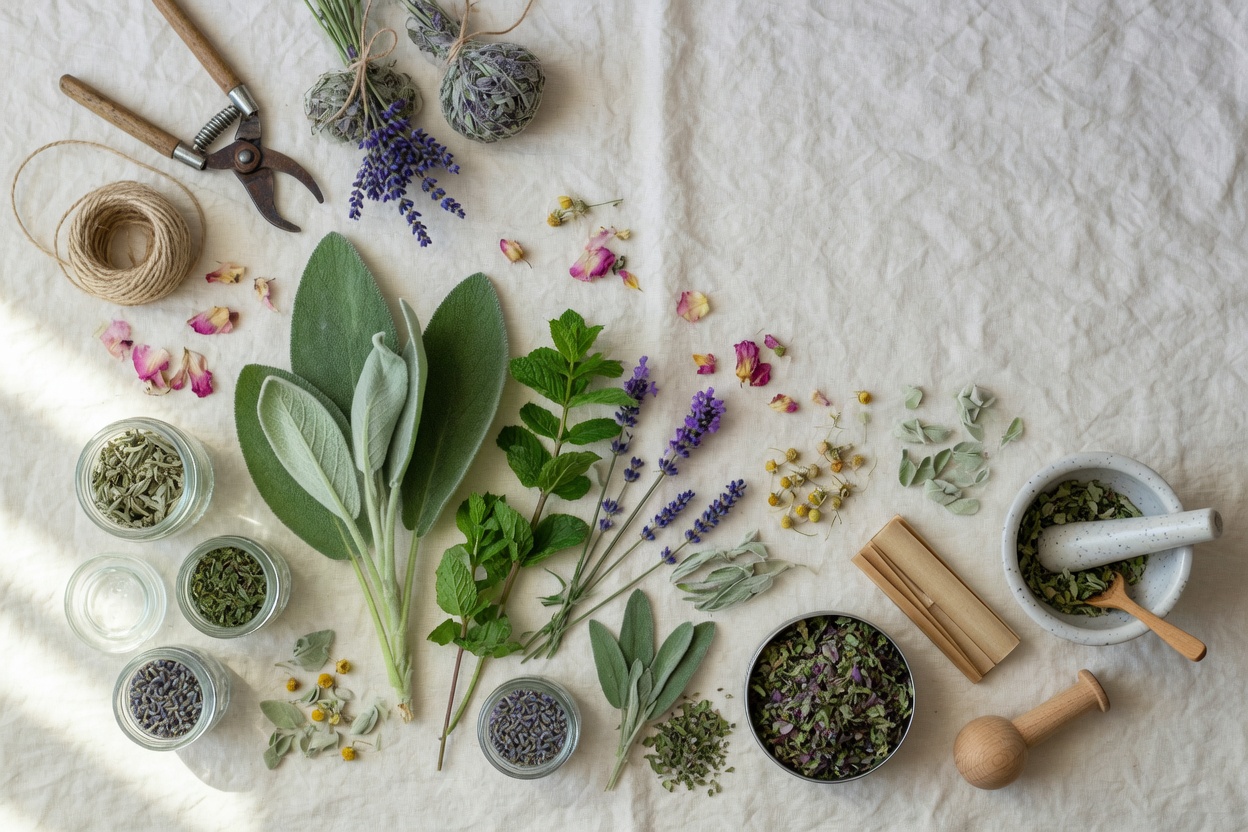
Storing finished blends and practical shelf-life considerations
Store finished blends in small, airtight containers away from light and heat to preserve volatile aromatics. Glass jars with tight seals perform well; include a desiccant only if humidity control is necessary to prevent mold. Expect optimal aromatic quality for 6–12 months depending on herb volatility; highly aromatic herbs like lavender and mint lose top notes faster than robust leaf bases like mullein.
Label batches with date and recipe. Small-batch production, sensory checks, and conservative storage practices keep blends flavorful and safe. With attention to cultivation timing, gentle drying, careful formulation, and proper storage, mullein, mint, lavender and other aromatic herbs for blends can create consistent, pleasing smokeable products.